Solar PV Installer
Field & Trades
Installs the rooftop and ground-mount solar panel systems behind the fastest-growing segment of the construction trades.
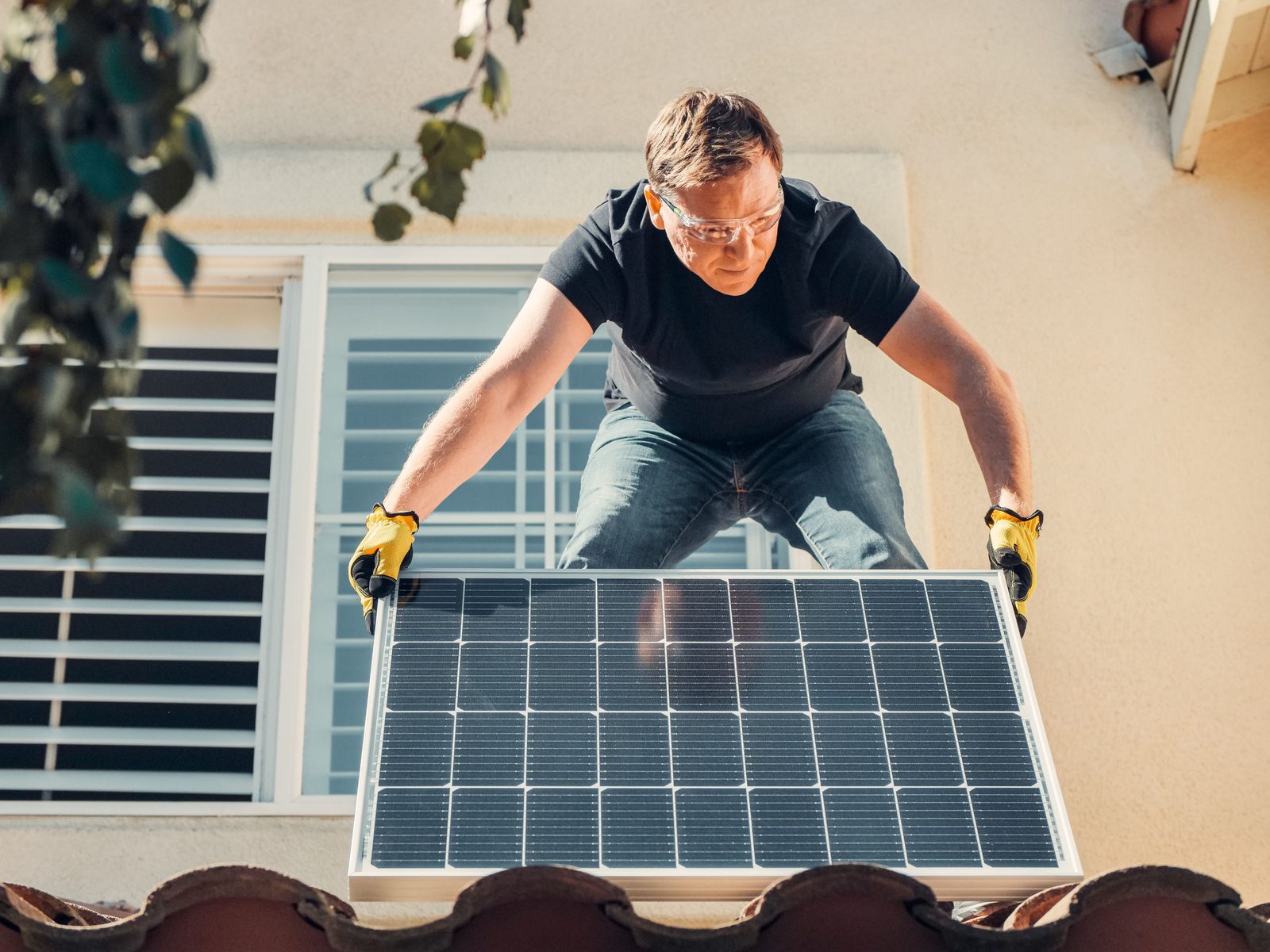
What is a Solar PV Installer?
A Solar PV Installer mounts and wires photovoltaic panel systems on roofs, ground mounts, and carports, connecting them into a building's electrical system. The role sits somewhere between roofing and electrical work: installers handle the physical racking and panel mounting themselves, but the electrical interconnection, especially anything past the panel's DC output, often has to be done or signed off by a licensed electrician depending on the state and the scope of work. Licensing for the trade itself is inconsistent nationwide, which is part of what makes it confusing to newcomers: some states have a dedicated solar contractor license, most simply fold solar work under existing electrical or general contractor licensing, and a national certification (NABCEP) has become the de facto credential installers use to prove their skills regardless of which state they're in.
What they do
- Install racking and mounting systems for rooftop or ground-mount solar arrays
- Mount and wire photovoltaic panels per the system design
- Connect PV systems to a building's electrical panel and the utility grid, working alongside or under a licensed electrician depending on state rules
- Test and commission completed systems to confirm they perform as designed
- Read solar system design drawings and site surveys to plan panel layout
- Perform maintenance and troubleshooting on existing solar installations
A typical day
- 6:30 AMReview the day's install plan and confirm panel and racking materials are staged
- 7:00 AMInstall racking and mounting hardware on a residential or commercial roof
- 10:30 AMMount and wire solar panels onto the completed racking
- 1:00 PMCoordinate with an electrician on the interconnection to the building's main electrical panel
- 3:00 PMTest and commission a completed system, checking output against the design specs
Skills
Software
Pay expectations
Pay by experience, nationally
as of May 2025
Source: U.S. Bureau of Labor Statistics, Occupational Employment and Wage Statistics (OEWS), Solar Photovoltaic Installers (SOC 47-2231), national data
Reviewed May 2025. Pay reflects the national wage distribution for this occupation, not a promise for any one job: entry level is the lower part of that range, 5 years in sits around the national median, and 10 years in is the upper part, since pay isn't actually tracked by years on the job. Real pay varies a lot by state, metro area, union status, and employer — scale these up or down for your market. These figures are base pay only: overtime, shift differentials, and per-project bonuses are standard across most construction trades and routinely push real earnings above what's shown here.
What this chart doesn't capture
Solar installation is one of the newer trades to build a contracting business around — real upside as demand grows, real risk tied to incentives and permitting that can shift by state.
These figures are wage-and-salary pay only — BLS excludes the self-employed and business owners entirely, and it's a new enough occupation that even less owner-income data exists than for established trades. Solar contracting income is also unusually exposed to policy: state incentives, utility interconnection rules, and permitting timelines all move independently of the actual installation work. Worth researching your own state's market before trusting any number you find.
Education
- Required:
- High school diploma or equivalent, then on-the-job training or a trade school solar program; licensing varies significantly by state. A minority of states, plus Puerto Rico, have a dedicated solar contractor license, most other states instead require installers to work under a licensed electrical or general contractor, and a smaller number have no state-level licensing requirement at all
- Preferred:
- NABCEP (North American Board of Certified Energy Practitioners) PV Installation Professional certification, a voluntary national credential that several states (including Maine, Minnesota, and Wisconsin) require for a project to qualify for state solar incentive programs, that Utah requires as a prerequisite for its state solar contractor license, and that Rhode Island accepts as one of several qualifying credentials for its Renewable Energy Professional license
- Not necessary:
- A four-year college degree; this is a hands-on, certification-driven trade
Career progression
- 1.Solar Installer (entry-level)
- 2.Lead Installer or Crew Lead
- 3.Solar Electrician (with electrical licensure) or Site Supervisor
- 4.Solar Contractor or Renewable Energy Project Manager
Who hires for this role
Explore next